As general manager for Dunlop truck tires in the 1980s, I was shocked to see a radial truck tire casing that had completed a 1,600,000km life, including two retread cycles. If we consider the truck tire’s design, it clearly is created to support the greater loads and recycling that is part of the service specification. But how different is it from a car tire, which carries less load and we have come to expect to change multiple times during a vehicle’s life?
It may be expected that the revolution that will achieve the use of green and replenishable materials will almost certainly develop new raw materials based on natural products that will outperform the existing man-made equivalents. This will surely be the result of the technologies now available to study the chemistry and the physics of these materials, from which we are gathering a greater understanding of product performance enhancement. A second reason is that the younger recruits to the industry have been educated since starting school to be green and preserve our world’s resources.
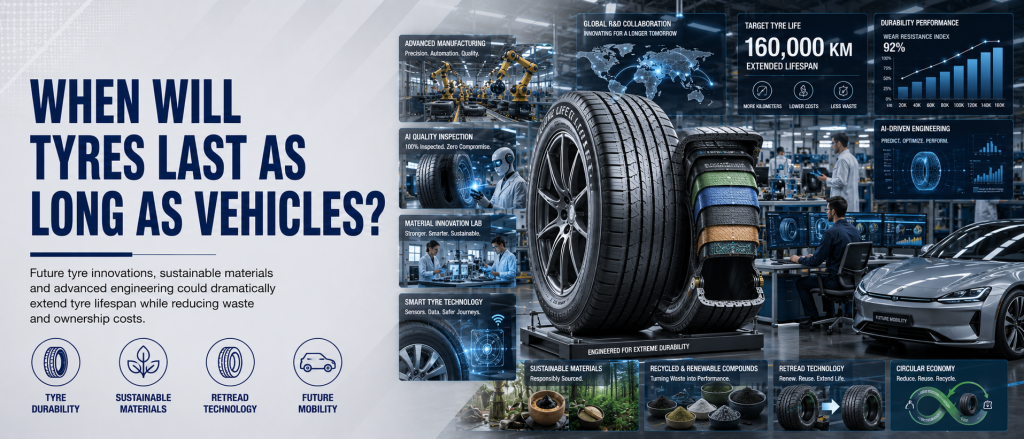
A review of the recent research relating to tire technology and materials gives a clear indication of the next technology upheaval. Sumitomo Dunlop introduced the 100% fossil-fuel-free tire in November 2013, a feat that many other tire manufacturers are still trying to emulate. Following Sumitomo’s achievement, the next real step toward a greener tire industry is to avoid three or more sets of tires being required throughout the life of an average car.
The tire industry has learned from the last revolution in tires, the move from crossply to radial, that being late could mean the end of one’s business. Given that the top five manufacturers account for over 50% of the world’s tire production, the effect of just one of these companies breaking ranks would be dramatic.
One final thought: perhaps what is described above could be brought forward through a proactive move from the tire regulators. They may well take encouragement from the somewhat premature introduction of TPMS regulations, which have proved successful. Maybe we will one day see an A-standard wear rating for car tires based on 100,000 miles/160,000km?