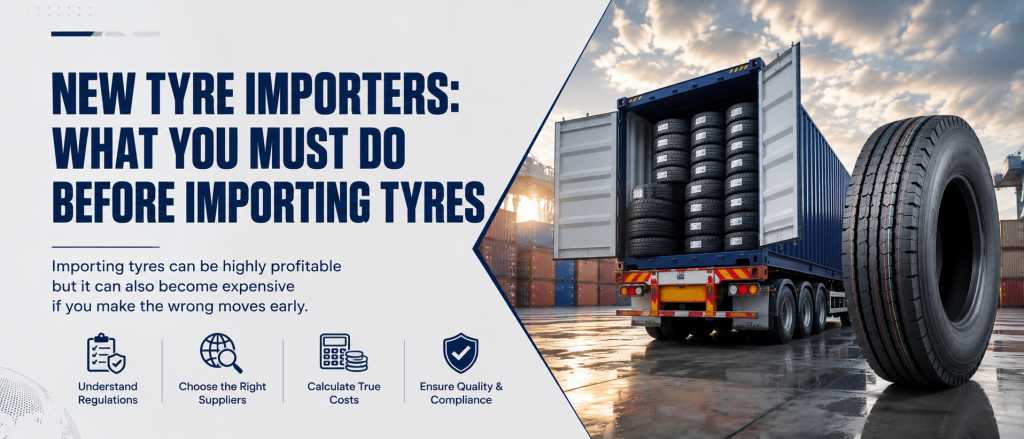
New Tyre Importers: What You Must Do Before Importing Tyres
Importing tyres can be highly profitable but it can also become expensive if you make the wrong moves early.
Many new importers focus only on price. They forget regulations, supplier checks, shipping costs, warranty risks, and product demand. That mistake can lead to delayed containers, rejected stock, or tyres that don’t sell.
If you’re a new tyre importer, wholesaler, distributor, retailer, or business owner, this guide explains what you must do before importing tyres so you can reduce risk and build a stronger business.
Why Tyre Importing Requires Planning
Tyres are regulated products linked to safety, performance, and transport standards. Unlike general goods, poor planning can create legal and financial problems.
Before placing your first order, you need a clear sourcing and compliance strategy.
1. Understand Your Market Demand
Start by knowing what sells in your region.
Focus on:
-
Popular tyre sizes
-
Passenger vs commercial demand
-
Seasonal tyre needs
-
Premium vs budget segments
-
Fast-moving brands or patterns
Example: A market with growing logistics activity may need more TBR tyres than PCR tyres.
2. Know Tyre Categories Before Buying
Different buyers need different tyre types.
Importing the wrong category can tie up capital in slow-moving stock.
3. Check Import Regulations & Certifications
Every country has tyre import rules. Never assume one market’s standards apply to another.
Check for:
-
Safety certifications
-
Labeling rules
-
Country-specific approvals
-
Customs documentation
-
Import duties and taxes
Missing documents can delay or block shipments.
4. Choose a Reliable Supplier
Your supplier matters more than a low price quote.
Check:
-
Factory reputation
-
Production capacity
-
Export experience
-
Quality consistency
-
Warranty support
-
Response speed
Ask for references and past export markets.
5. Understand Total Landed Cost
Many new importers calculate tyre price only. That is a major mistake.
Include:
-
Product cost
-
Freight charges
-
Insurance
-
Customs duty
-
Taxes
-
Port charges
-
Local transport
-
Storage costs
True profit starts after landed cost.
6. Plan Your Stock Mix
Don’t fill a container with random sizes.
Smart first orders include:
-
Fast-moving common sizes
-
Mixed price points
-
Balanced seasonal demand
-
Limited slow-moving sizes
This improves cash flow and turnover.
7. Protect Your Brand Reputation
Even if you are importing under another brand, customers judge you.
Offer:
-
Honest specifications
-
After-sales support
Trust builds repeat business.
Common Mistakes New Tyre Importers Make
-
Buying only on cheapest price
-
Ignoring compliance rules
-
Importing unknown sizes
-
Overordering first shipment
-
Not checking production dates
-
Weak supplier communication
Expert Tips for First-Time Importers
-
Start with one container, not multiple
-
Test demand before scaling
-
Build long-term supplier relations
-
Compare 3–5 suppliers before deciding
-
Focus on repeatable margins, not one-time deals
Final Thoughts
Tyre importing is not just buying products overseas. It is about choosing the right supplier, right stock, right compliance path, and right pricing model.
New importers who prepare properly grow faster and avoid costly setbacks.
Planning to import tyres for your business? Contact our team today for expert guidance on sourcing, product selection, pricing, and reliable tyre supply solutions.
FAQs
1. Is tyre importing profitable?
Yes, when managed with correct pricing, compliance, and market demand.
2. How large should my first order be?
Start small, test demand, then scale safely.
3. What is landed cost?
It is the full cost after freight, duties, taxes, and logistics.
4. How important is tyre production date?
Very important. Buyers prefer newer production stock.