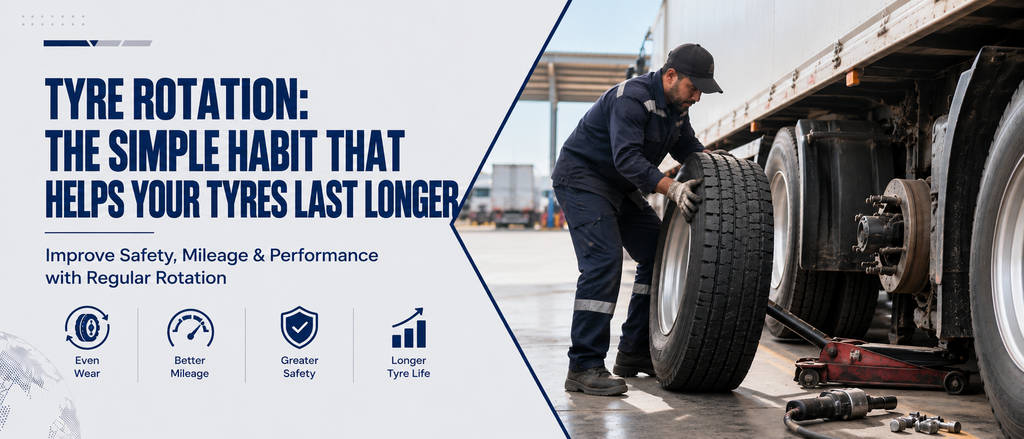
Tyres are one of the hardest-working components of any vehicle, yet they are often overlooked until performance starts to decline. While many drivers focus on oil changes and engine servicing, a simple maintenance routine can significantly improve tyre life, driving safety, and overall vehicle performance—tyre rotation.
Whether you operate a commercial fleet, manage heavy-duty trucks, or drive a passenger vehicle, rotating your tyres at the right intervals is one of the easiest ways to maximize your investment. In this guide, we’ll explain what tyre rotation is, why it matters, and how it helps you get more value from every kilometre.
What Is Tyre Rotation?
Tyre rotation is the process of moving each tyre to a different position on the vehicle according to a recommended rotation pattern. Since the front and rear tyres perform different tasks, they naturally wear at different rates.
By periodically changing their positions, tread wear becomes more uniform, allowing every tyre to reach its full service life before replacement is needed. Proper tyre rotation is a standard maintenance practice recommended by vehicle manufacturers and tyre experts worldwide.
Why Do Tyres Wear Unevenly?
Not all tyres experience the same amount of stress during everyday driving. Several factors contribute to uneven tread wear, including:
- Front tyres handling steering and most braking forces.
- Rear tyres supporting different load distributions.
- Frequent cornering and acceleration.
- Road conditions and driving habits.
- Wheel alignment and tyre pressure.
Without regular rotation, certain tyres wear out much sooner than others, resulting in premature replacement.
Key Benefits of Regular Tyre Rotation
1. Extends Tyre Service Life
Even tread wear allows every tyre to perform consistently, helping you get the maximum mileage before replacement.
2. Improves Road Safety
Balanced tread depth across all four tyres provides better grip during braking, cornering, and wet-weather driving, reducing the risk of losing traction.
3. Increases Fuel Efficiency
Tyres with consistent wear create more balanced rolling resistance, helping your vehicle operate more efficiently and reducing unnecessary fuel consumption.
4. Delivers Better Ride Comfort
Unevenly worn tyres often create vibrations and additional road noise. Rotated tyres provide a smoother, quieter driving experience.
5. Lowers Overall Operating Costs
Replacing one or two tyres earlier than necessary increases maintenance expenses. Regular rotation helps delay tyre replacement and reduces long-term operating costs.
How Often Should Tyres Be Rotated?
Although recommendations vary depending on vehicle type and tyre design, a good rule is to rotate tyres approximately every 8,000 to 10,000 kilometres for passenger vehicles, or according to your vehicle manufacturer’s maintenance schedule.
For commercial trucks and fleet vehicles operating under heavy loads, inspections should be performed more frequently to determine the ideal rotation interval based on operating conditions.
Signs Your Tyres May Need Rotation
Watch for these common indicators:
- Uneven tread wear between front and rear tyres.
- One side of the tyre wears faster than the other.
- Vehicle vibration while driving.
- Increased road noise.
- Steering feels less responsive than usual.
If you notice any of these symptoms, have your tyres inspected by a qualified technician.
Tyre Rotation Works Best with Proper Maintenance
Rotation alone cannot solve every tyre problem. For maximum performance, combine it with other routine maintenance practices:
| Maintenance Task | Benefit |
| Maintain correct tyre pressure | Prevents irregular wear and improves fuel economy |
| Wheel alignment | Keeps tyres wearing evenly |
| Wheel balancing | Reduces vibration and protects suspension components |
| Regular tyre inspections | Detects cuts, punctures, or sidewall damage early |
| Avoid vehicle overloading | Prevents excessive heat buildup and premature wear |
Together, these maintenance practices can significantly improve tyre performance and lifespan.
Why Fleet Operators Should Never Skip Tyre Rotation
For logistics companies, construction businesses, mining operations, and long-haul transport fleets, tyre expenses represent a substantial operating cost. Extending tyre life by even a small percentage can translate into considerable annual savings across an entire fleet.
Routine tyre rotation also helps reduce unexpected downtime, improves vehicle reliability, and supports consistent performance across different road conditions.
Final Thoughts
Tyre rotation is one of the simplest maintenance habits with the biggest long-term rewards. By ensuring even tread wear, it helps extend tyre life, improves handling, enhances safety, and reduces operating costs.
Whether you’re maintaining a family vehicle or managing an entire commercial fleet, following a regular tyre rotation schedule protects your investment and keeps your vehicles performing at their best.
At Aquila Tyre, we believe that quality tyres deliver the greatest value when paired with proper maintenance. A few minutes of preventative care today can help you achieve thousands of extra kilometres tomorrow.
FAQs
1. What is tyre rotation?
Tyre rotation is the process of moving tyres to different positions on a vehicle to ensure even tread wear and extend their service life.
2. How often should tyres be rotated?
Most passenger vehicles benefit from tyre rotation every 8,000–10,000 km, while commercial vehicles may require different intervals depending on operating conditions and manufacturer recommendations.
3. Does tyre rotation improve fuel efficiency?
Yes. Evenly worn tyres reduce rolling resistance, which can contribute to better fuel economy and smoother vehicle performance.
4. Can tyre rotation improve driving safety?
Absolutely. Uniform tread wear provides more consistent grip, shorter braking distances, and better vehicle stability, particularly in wet conditions.
5. Is tyre rotation enough to maximise tyre life?
No. The best results come from combining tyre rotation with proper inflation, wheel alignment, balancing, routine inspections, and avoiding vehicle overloading.