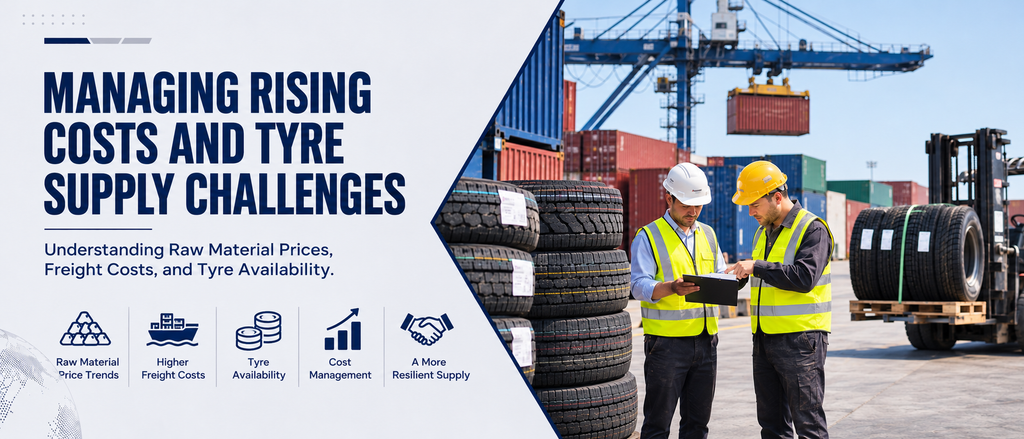
Understanding the impact of raw material price fluctuations, increasing shipping expenses, and changing tyre availability on purchasing decisions.
The global tyre industry is facing several challenges that influence how manufacturers, importers, and distributors plan their purchasing activities. Although competitive pricing remains important, securing the right products at the right time and managing overall delivery costs are equally essential.
Three factors are becoming particularly important in purchasing discussions: fluctuations in raw material prices, higher ocean freight expenses, and inconsistent availability of certain tyre sizes and patterns. These challenges can affect purchasing budgets, supply schedules, and business planning across different markets.
Raw Material Price Fluctuations Influence Tyre Manufacturing Costs
The production of tyres relies on several essential materials, including natural rubber, synthetic rubber, carbon black, steel cord, and other components. Changes in the prices of these materials can influence manufacturing expenses and eventually affect the prices offered to buyers.
According to the September 2026 report published by the Association of Natural Rubber Producing Countries (ANRPC), several major natural rubber grades recorded price increases during the month. However, price movements varied across individual grades, demonstrating that raw material markets do not always follow the same direction.
For tyre manufacturers and buyers, monitoring these changes is important when evaluating purchasing costs and future supply requirements.
Importers should also pay attention to quotation validity periods and the conditions under which prices are confirmed. A preliminary quotation or purchasing discussion does not necessarily guarantee a fixed price unless the supplier has formally confirmed the agreed terms.
Increasing Ocean Freight Expenses Raise Import Costs
A competitive factory price does not always translate into an economical import transaction. Shipping expenses can significantly influence the final landed cost, particularly when ocean freight rates increase or transportation schedules become less predictable.
India’s Automotive Tyre Manufacturers Association (ATMA) has highlighted the potential impact of disruptions along major shipping routes. Such disruptions can increase transportation expenses, extend transit durations, and affect the movement of raw materials required for tyre manufacturing. The extent of the impact depends on the shipping route and destination.
When evaluating transportation costs, importers should consider more than the quoted freight rate. Sailing frequency, transshipment requirements, destination charges, and container free time can all affect the total cost of an imported shipment.
Consider a container carrying 250 tyres. If its freight expense increases by USD 1,000, the additional transportation cost amounts to USD 4 per tyre, excluding other charges. For distributors working with tight profit margins, even a relatively small increase in container freight can affect overall profitability.
Limited Availability of Certain Tyre Sizes and Patterns
Product availability is another important consideration in the international tyre trade. Not every tyre size or pattern is necessarily available at the same time, and production requirements can differ depending on the specification and demand.
Buyers should therefore understand the difference between products available for immediate dispatch, quantities scheduled for manufacturing, and stock that has been formally allocated to their orders. These distinctions help establish realistic expectations regarding shipment timelines.
For distributors, insufficient availability of frequently demanded sizes can result in missed sales opportunities. Similarly, commercial fleet operators may experience maintenance planning difficulties when replacement tyres are not available when required.
When the preferred specification cannot be supplied within the required timeframe, alternative products may be considered. However, any replacement must satisfy the relevant application requirements, load capacity, certification standards, and expected performance characteristics.
Practical Purchasing Strategies for Tyre Importers and Distributors
Managing supply uncertainty requires coordination between buyers, manufacturers, suppliers, and logistics partners. A more structured purchasing process can help businesses reduce avoidable delays and make better-informed decisions.
The following practices can support more effective procurement planning:
- Submit requirements in advance: Communicate required tyre sizes, patterns, quantities, and delivery destinations early in the purchasing process.
- Verify product availability: Confirm current stock positions and allocated quantities before committing to delivery schedules.
- Evaluate complete landed costs: Consider factory prices, ocean freight, destination expenses, and other applicable charges when comparing suppliers.
- Allow sufficient replenishment time: Build realistic manufacturing and shipping lead times into inventory planning.
- Complete payment and shipping documentation: Coordinate financial arrangements and required paperwork to minimize preventable shipment delays.
- Assess technically suitable alternatives: Where preferred products are unavailable, evaluate alternative specifications that meet the intended application and performance requirements.
Effective planning does not necessarily require businesses to increase their inventory. Instead, it allows importers and distributors to make purchasing decisions with sufficient time while maintaining control over working capital and cash flow.
Building More Reliable Tyre Supply Chains
The international tyre trade requires more than competitive product pricing. Consistent product availability, dependable manufacturing schedules, efficient logistics, and clear communication all contribute to a reliable supply chain.
As raw material prices fluctuate, freight expenses change, and product availability varies, manufacturers and buyers need to maintain closer coordination throughout the procurement process.
For importers and distributors, developing dependable supplier relationships and maintaining visibility over upcoming requirements can help support more consistent purchasing and inventory planning.
Ultimately, successful procurement depends on balancing several factors rather than focusing on price alone.
A reliable tyre purchasing strategy combines competitive pricing, technical suitability, product availability, and dependable delivery schedules.
Businesses involved in the global tyre trade should continue to evaluate these factors when planning their sourcing and replenishment activities.
FAQs
Natural rubber, synthetic rubber, carbon black, steel cord, and other manufacturing inputs influence tyre production costs.
Higher freight expenses increase landed costs and can reduce distributors’ profit margins.
Availability can vary due to production schedules, demand levels, and manufacturing requirements.
Importers can plan orders early, confirm stock allocation, monitor freight costs, and maintain realistic replenishment schedules.
Alternative tyres should meet the required application, load capacity, certification, and performance requirements.