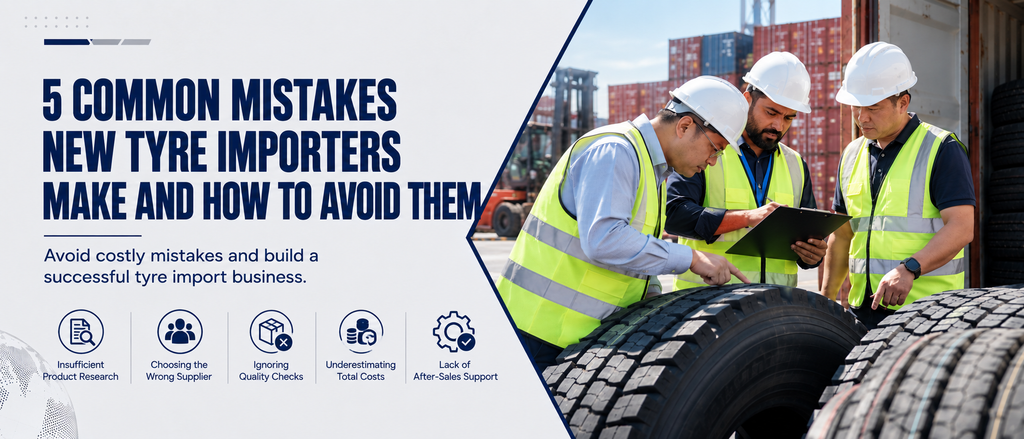
Starting a tyre import business can be a profitable opportunity, but success depends on making informed decisions from the very beginning. Many first-time importers focus only on securing the lowest price, overlooking factors that directly affect product quality, customer satisfaction, and long-term profitability.
Whether you’re importing truck tyres, passenger car tyres, or off-the-road tyres, understanding the common pitfalls can save you from expensive mistakes. Below are five challenges many new importers face—and practical ways to avoid them.
1. Choosing Suppliers Based Only on the Lowest Price
A low quotation may look attractive, but price alone should never determine your supplier selection. Cheap tyres can result in inconsistent quality, shorter service life, and higher warranty claims, all of which can damage your reputation.
Instead, evaluate suppliers based on:
- Manufacturing standards and certifications
- Product consistency
- Export experience
- Quality control procedures
- Customer support and after-sales service
Building a relationship with a dependable supplier often delivers greater value than choosing the cheapest option.
2. Ignoring Local Market Requirements
Not every tyre performs equally well in every market. Road conditions, weather, vehicle types, and customer preferences vary from country to country.
Before placing your first order, research:
- Popular tyre sizes
- Load and speed requirements
- Local regulations and certifications
- Customer buying behavior
- Market competition
Importing products that match local demand helps improve inventory turnover and customer satisfaction.
3. Overlooking Total Import Costs
Many new importers calculate only the product price and underestimate the actual landed cost.
Additional expenses may include:
- Ocean freight
- Import duties and taxes
- Customs clearance
- Inland transportation
- Warehousing
- Insurance
Preparing a complete cost analysis before ordering allows you to price your products competitively while protecting your profit margins.
Example Cost Breakdown
| Cost Component | Why It Matters |
| Product Cost | Initial purchase price |
| Freight | Transportation from the factory to the destination |
| Customs & Duties | Country-specific import charges |
| Warehousing | Storage before distribution |
| Local Delivery | Transport to dealers or customers |
4. Skipping Product Quality Verification
Ordering without inspecting tyre quality can create costly problems after the shipment arrives.
Before confirming production, request:
- Product specifications
- Test reports
- Factory certifications
- Sample tyres
- Production photos or inspection reports
Working with manufacturers that follow strict quality management systems reduces business risk and builds customer confidence.
5. Failing to Build a Long-Term Supplier Partnership
Many first-time buyers treat suppliers as one-time vendors. In reality, successful import businesses are built on strong, long-term partnerships.
Reliable supplier relationships often provide:
- Stable product quality
- Better pricing over time
- Faster production scheduling
- Priority during peak demand
- Improved communication
A trusted supplier becomes a valuable business partner rather than simply a product source.
Best Practices for First-Time Tyre Importers
To improve your chances of success:
- Research your target market thoroughly.
- Compare suppliers on quality, not just price.
- Calculate complete landed costs before ordering.
- Verify certifications and inspection reports.
- Start with manageable order quantities.
- Maintain clear communication with your supplier.
- Plan inventory based on market demand.
Why Choosing the Right Tyre Partner Matters
The tyre industry is highly competitive, making supplier selection one of the most important business decisions. A reliable partner provides consistent quality, dependable delivery schedules, and technical support that helps your business grow sustainably.
Working with an experienced global tyre supplier also reduces operational risks and gives importers greater confidence when expanding into new markets.
Conclusion
Every successful tyre importer starts with a learning curve, but many common mistakes can be avoided through careful planning and informed decision-making. Looking beyond price, understanding your market, calculating total costs, verifying quality, and developing strong supplier relationships will help create a more profitable and sustainable import business.
Taking the time to make the right decisions today can save high costs and strengthen your business for years to come.
FAQs
Choosing a supplier based solely on the lowest price without evaluating quality, reliability, and after-sales support.
Request product certifications, inspection reports, factory credentials, and product samples before placing a large order.
Landed cost includes freight, customs duties, insurance, storage, and local transportation, giving a more accurate picture of total investment.
Look for manufacturers with proven export experience, quality certifications, consistent production standards, and responsive customer service.