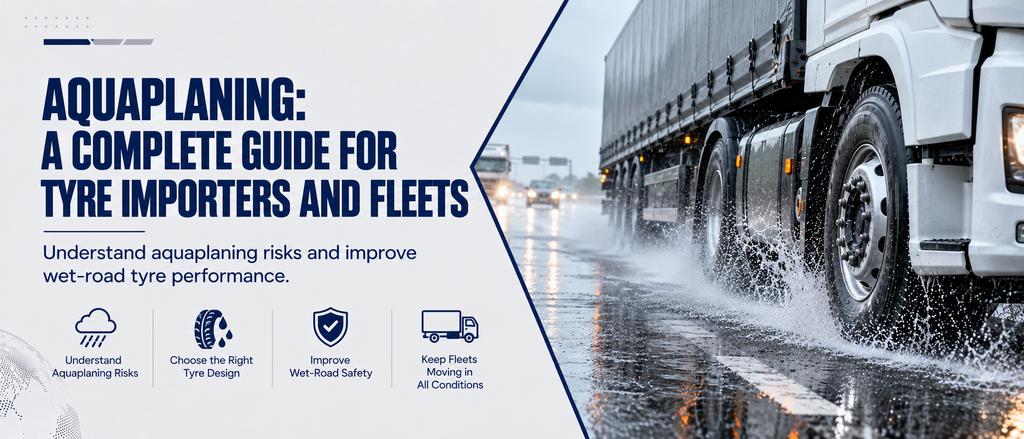
Why Aquaplaning Matters in Commercial Transportation
Imagine a long-haul truck travelling on a rainy highway. As it passes through standing water, the steering suddenly feels lighter and the vehicle begins to lose grip. This is a common sign of aquaplaning, also known as hydroplaning.
For fleet operators, aquaplaning is a serious safety risk that can lead to accidents, delivery delays and increased operating costs. For tyre importers, understanding wet-road performance is equally important when selecting tyres for different markets.
Although aquaplaning cannot always be prevented, suitable tyre selection, regular maintenance and responsible driving can help reduce the risk.
What Is Aquaplaning?
Aquaplaning occurs when water builds up between the tyre and road surface, reducing the tyre’s contact with the road. This can result in reduced traction, delayed braking and unstable steering.
For commercial vehicles carrying heavy loads, even a temporary loss of grip can have serious consequences.
Six Factors That Increase Aquaplaning Risk
1. Vehicle Speed
Higher speeds give tyres less time to evacuate water from their contact area, increasing the risk of losing grip. Reducing speed during heavy rainfall is an important precaution.
2. Water Depth and Road Drainage
Deep standing water, flooded roads and poor drainage make it harder for tyres to maintain contact with the road.
3. Tread Depth
Tread grooves help channel water away from the tyre’s contact area. As tyres wear, their ability to evacuate water decreases, making regular tread-depth inspections essential.
4. Incorrect Tyre Pressure
Incorrect inflation can affect tyre shape, handling and wet-road performance. Fleet operators should follow the manufacturer’s recommended pressure and check it regularly.
5. Tread Pattern and Tyre Design
Groove arrangement, tread geometry and tyre construction all influence water evacuation. Overall tyre design and operating conditions determine wet-road performance.
6. Road Surface
Road texture, surface wear and drainage conditions affect tyre grip. Even well-designed tyres have limitations on roads with deep standing water.
Why Aquaplaning Matters for Importers and Fleets
Aquaplaning can lead to several operational and financial problems, including:
- Increased accident risk and loss of vehicle control
- Cargo damage and delivery delays
- Vehicle downtime and higher operating costs
- Driver safety concerns
- Customer complaints and potential warranty issues
For importers, selecting tyres that match the target market’s vehicles, loads and road conditions is important. The lowest purchase price does not always represent the best long-term value.
How Tyre Engineering Helps Reduce Aquaplaning
Tyre engineering plays an important role in wet-road performance. Four key areas contribute to tyre design.
1. Rubber Compound Development
Rubber compounds influence wet grip, rolling resistance, wear and durability. Manufacturers develop compounds to balance these characteristics according to the tyre’s intended application.
2. Water-Evacuation Tread Designs
Tread grooves and channels help move water away from the contact area. Engineers optimize groove positioning and geometry while considering handling, wear and other performance requirements.
3. Reinforced Tyre Construction
Casing design and internal components influence how commercial tyres perform under load and at speed. Stable construction helps maintain the tyre’s intended shape and operating characteristics.
4. CAD-Based Design and Simulation
Computer-aided design and simulation help engineers evaluate tread geometry, tyre deformation and water movement. These tools support product development but do not replace physical testing.
Modern Chinese Tyre Technology and Global Standards
China’s tyre industry has developed significantly, with manufacturers investing in rubber compounds, tread engineering, automated production, testing and quality-control systems.
Modern Chinese manufacturers develop tyres for different applications, including long-haul transportation, regional distribution, heavy loads and high-temperature environments.
Export tyres may also need to comply with UNECE, DOT, GCC and other market-specific requirements, depending on their category and destination. Importers should verify the applicable certifications before purchasing.
When choosing a supplier, businesses should consider:
- Application suitability and technical specifications
- Production consistency and quality control
- R&D and manufacturing capabilities
- Relevant certifications and documentation
- Technical and after-sales support
How Fleets Can Reduce Aquaplaning Risks
Tyre technology alone cannot eliminate aquaplaning. Fleet operators should also maintain appropriate tyre pressure, monitor tread depth, inspect tyres for damage and replace worn tyres when necessary.
Drivers should reduce speed during heavy rain, maintain a safe following distance and avoid deep standing water whenever possible.
If aquaplaning occurs, drivers should ease off the accelerator, avoid sudden braking and keep steering movements smooth until the tyres regain contact with the road.
Final Thoughts
Aquaplaning is a significant safety risk for commercial vehicles, but proper tyre selection and maintenance can help reduce its likelihood.
Tread depth, tyre pressure, vehicle speed, road conditions and tyre engineering all influence wet-road performance. For importers, choosing tyres based on application suitability, quality and regulatory compliance is essential.
At Aquila, we believe choosing the right tyre starts with understanding the application. We work with Chinese tyre manufacturers to provide products suited to different markets and commercial requirements.
Contact the Aquila team to discuss suitable tyre specifications and solutions for your business.
FAQs
Aquaplaning occurs when water reduces the contact between a tyre and the road, affecting grip and vehicle control.
High speed, deep water, worn tread, incorrect tyre pressure and road conditions can increase the risk.
Tread grooves help channel water away from the tyre’s contact area, supporting wet-road grip.
Correct tyre pressure helps maintain the tyre’s intended shape, handling and contact characteristics.
No. Tread depth is important, but tread design, speed, water depth, tyre pressure and road conditions also affect aquaplaning risk.