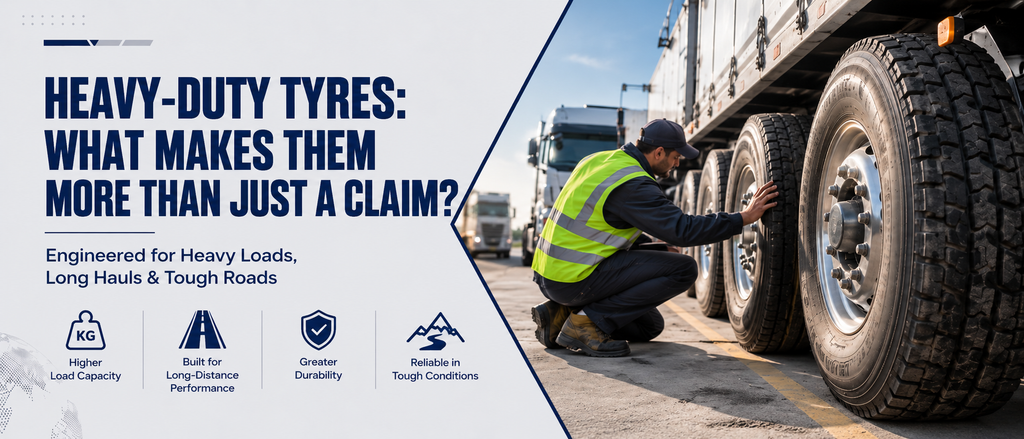
Heavy-duty tyres are designed to handle demanding transport conditions, but not every tyre marketed as heavy-duty offers the same construction. Steel belt reinforcement, load capacity and sidewall strength are important factors when choosing tyres for commercial fleets.
What Makes a Tyre Heavy-Duty?
The difference often starts with internal construction.
- 4+1 construction: Typically features four steel belts beneath the tread and one reinforcing layer.
- 5+1 or 6+1 construction: Includes additional reinforcement to support demanding applications.
This construction can help tyres handle heavy loads, long-distance transport and challenging road conditions. However, actual performance also depends on tyre specifications and operating conditions.
Load Index and Speed Rating
Tyre sidewall markings provide essential information about load capacity and speed limits. For example, 154/150 is a load index marking, while J or K indicates the speed rating.
Fleet operators should select tyres according to vehicle requirements, axle loads and intended use. A higher load index does not automatically mean a tyre is suitable for every vehicle.
Built for Demanding Conditions
Heavy-duty tyres may be used in construction, long-haul transport and regional operations. Depending on their design, deeper tread patterns, reinforced sidewalls and heat-resistant compounds can support durability and performance.
Choosing the right tyre requires considering road conditions, load, expected mileage and maintenance.
4+1 vs. 5+1: What Should Fleets Consider?
For a fleet of 40 vehicles, choosing between lower-priced 4+1 tyres and premium 5+1 tyres involves more than the initial purchase price.
A lower-priced tyre may require more frequent replacement or lead to additional downtime. A premium tyre may offer longer service life and fewer failures, potentially reducing total operating costs.
These results are not guaranteed. Actual performance depends on tyre quality, vehicle condition, loading, road conditions and maintenance.
Conclusion
Choosing a heavy-duty tyre is about more than its label or price. Construction, load and speed ratings, sidewall strength and tread design all matter.
Fleet operators should compare these specifications with their operating requirements to make informed purchasing decisions and manage long-term tyre costs.
Looking for tyres for demanding fleet operations? Contact Aquila to discuss your requirements.
FAQs
1. What makes a tyre heavy-duty?
Heavy-duty tyres are designed for demanding applications and may feature reinforced construction and suitable load ratings.
2. What is the difference between 4+1 and 5+1 construction?
A 5+1 construction has an additional steel belt compared with a 4+1 design.
3. Does a higher load index mean a better tyre? Not necessarily.
The correct load index depends on the vehicle, axle load and operating requirements.
4. Are heavy-duty tyres suitable for long-distance transport?
They can be, provided their specifications match the vehicle, load and road conditions.
5. What should fleets consider when choosing heavy-duty tyres?
Fleets should consider construction, load and speed ratings, tread design, operating conditions and total cost.