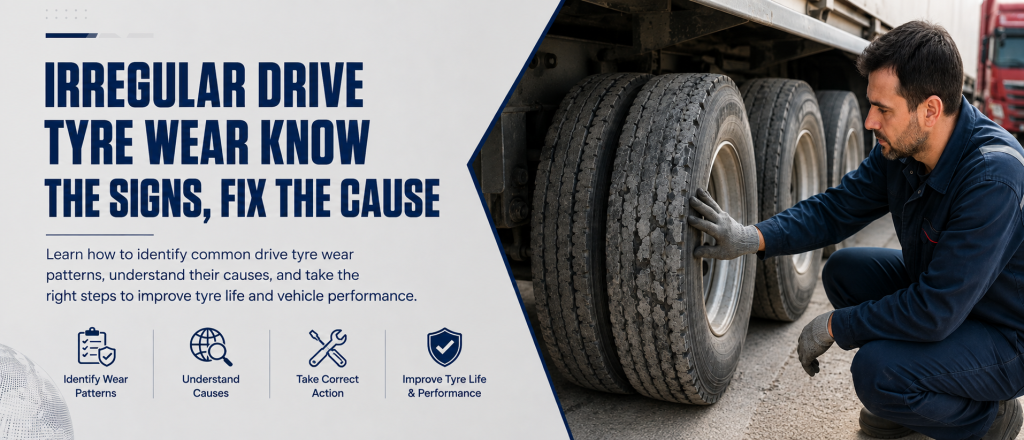
Drive position tyres endure high torque and rugged use. When wear patterns appear, they're not random—they're signals. Here's how to read them, fix the cause, and extend tyre life:
1. Multiple Cuts / Chunking
What it looks like: Rough tread surface with small cuts or missing rubber.
Why it happens: Rough terrain + wrong tread compound.
What to do: Re-evaluate tyre selection and driving conditions.
Tyre status: Minor? Keep running. Severe? Consider repair or retread.
2. Vehicle / Spin Damage
What it looks like: Circular lines or cuts around the tread.
Why it happens: Tyre rubbing vehicle parts or spinning on slick surfaces.
What to do: Check for contact points and driving habits.
Tyre status: Superficial? Continue using. Deep damage? Retread or scrap.
3. Brake Skid Damage
What it looks like: One harshly worn patch, sometimes through the casing.
Why it happens: Brake issues or sudden hard braking.
What to do: Inspect brake system thoroughly.
Tyre status: Retread if casing is sound. Scrap if not.

4. Stone Retention / Drilling
What it looks like: Stones stuck between tread blocks, possibly deep.
Why it happens: Gravel roads + overinflation or wrong tyre.
What to do: Remove debris and monitor inflation.
Tyre status: Use unless stones hit steel belts — then consult a professional.
5. Heel / Toe Wear
What it looks like: Lugs wearing from high to low front-to-back.
Why it happens: Mismatched pressures, high torque, or hilly terrain.
What to do: Adjust maintenance routines and check tyre pairing.
Tyre status: Keep using. If severe, rotate direction.
6. Cupping / Scallop Wear
What it looks like: Wavy or uneven lug wear around the tyre.
Why it happens: Poor suspension or mismatched dual tyres.
What to do: Inspect suspension, pressures, and match tyres.
Tyre status: Run after addressing root causes.

Reminder: Staying alert to wear patterns helps prevent downtime and saves you money long-term. Regular inspections and smart maintenance go a long way.