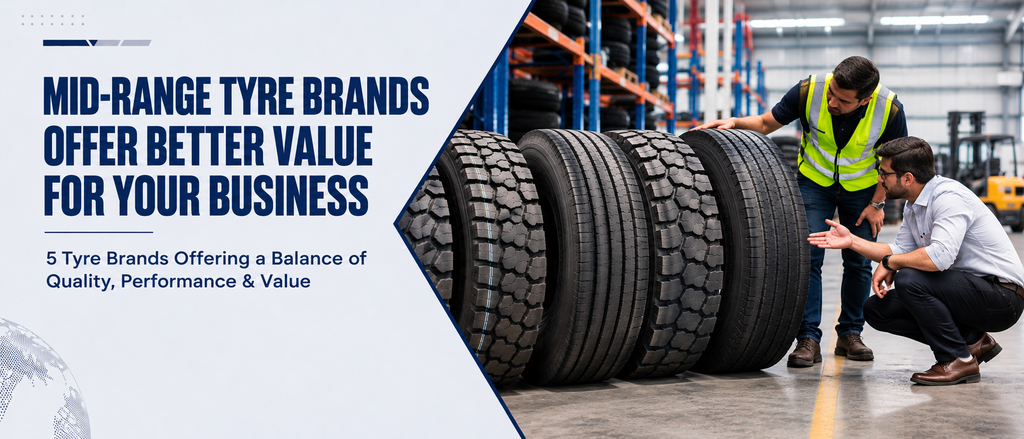
Is buying the cheapest tyre always the smartest business decision?
For tyre importers, wholesalers and distributors, selecting the right products involves more than comparing prices. Product quality, tread life, manufacturing consistency and long-term operating costs all play an important role in determining the actual value of a tyre.
Consider a fully loaded truck travelling on a long-distance route when a tyre unexpectedly fails. The vehicle stops, delivery schedules are disrupted, and additional expenses begin to accumulate. What initially looked like a cost-saving purchase can quickly become a financial burden.
This is where mid-range tyre brands become an important consideration. Positioned between entry-level and premium products, they offer buyers an opportunity to balance purchasing budgets with product quality and performance expectations.
Let’s explore what these brands can offer and why they deserve consideration when developing a tyre portfolio.
The Real Cost Behind Low-Priced Tyres
A low purchase price does not necessarily mean lower operating costs. For businesses handling commercial vehicles and large tyre inventories, several additional factors can influence profitability.
Some common concerns include:
- Frequent Replacements: Faster tread wear can increase the number of replacements required over time.
- Operational Downtime: Vehicles that cannot operate because of tyre-related issues may affect delivery schedules and business earnings.
- Quality Variations: Differences between production batches can create challenges for distributors and their customers.
- Customer Dissatisfaction: Repeated complaints and quality-related claims can damage business relationships and affect profit margins.
For this reason, tyre buyers should consider the overall cost of ownership instead of focusing exclusively on the initial purchase price.
Why Consider Mid-Range Tyres?
Moving beyond entry-level products can provide several advantages, depending on the manufacturer, tyre model and intended application.
Here are some important factors to evaluate:
- Tread Life: Selecting a suitable tyre for its intended application can help manage replacement frequency and cost per kilometre.
- Manufacturing Consistency: Consistent production standards are important for maintaining product quality across different orders.
- Supplier Support: Warranty arrangements, technical assistance and product availability can contribute to a stronger supplier relationship.
- Product Availability: A suitable product range makes it easier for distributors to maintain inventory and fulfil repeat orders.
- Competitive Pricing: Mid-range products allow businesses to target customers who want alternatives to both budget and premium-priced tyres.
The objective is not simply to spend more, but to select products that provide appropriate value for the intended market.
5 Mid-Range Tyre Brands to Explore
Every tyre market has different customer expectations, purchasing budgets and operating conditions. Therefore, selecting suitable brands requires an understanding of the market segment you want to serve.
Here are five mid-range tyre brands worth considering when expanding your product portfolio.
1. ONYX and OVATION: Two Brands from Hengfeng Factory
ONYX and OVATION share the same manufacturing background: Hengfeng. However, both brands have different market positioning, giving tyre distributors options for serving different customer segments.
ONYX Tyres target buyers looking for dependable performance and competitive pricing without the higher price positioning of premium products.
OVATION Tyres provide an alternative for customers looking to move beyond entry-level products while maintaining a balance between comfort, performance and value.
For importers and wholesalers, offering both brands can provide additional flexibility when catering to customers with different budgets and product preferences.
2. HONSWAY: Balancing Quality and Competitive Pricing
Manufactured by Seyoun, HONSWAY is positioned for buyers who want to balance product quality with competitive pricing.
The brand is worth considering for distributors looking to introduce another mid-range option into their existing tyre portfolio.
For businesses targeting customers who want to move beyond entry-level products, HONSWAY offers an additional brand to evaluate.
3. DOVROAD: A Practical Option for Everyday Requirements
DOVROAD focuses on buyers seeking everyday tyre performance at competitive prices.
For distributors looking to expand beyond the lowest-priced market segment, the brand provides another option to consider when building a product range around customer budgets and business margins.
4. ROATIGER: A Distinctive Brand with a Value-Focused Approach
ROATIGER brings a distinctive brand identity and a value-oriented market approach.
It can be considered by distributors operating in markets where customers are looking for competitively priced products and recognisable branding.
A distinctive brand identity can also help distributors introduce additional choices to their customers.
5. How to Select the Right Brand for Your Market
Choosing a tyre brand should always begin with an understanding of your target customers and local market conditions.
Before making a purchasing decision, consider the following:
- Tyre Applications: Understand which vehicle types and tyre sizes your customers require.
- Road Conditions: Consider the operating environments in which the tyres will be used.
- Customer Budgets: Evaluate local purchasing power and market price expectations.
- Product Availability: Check whether the manufacturer can support your future ordering requirements.
- Supplier Reliability: Consider manufacturing consistency, warranty arrangements and technical support.
A well-structured tyre portfolio should address different customer requirements rather than relying entirely on the lowest available price.
When Should You Upgrade Your Tyre Product Range?
For tyre importers, wholesalers and distributors, certain business challenges may indicate that an existing product portfolio needs improvement.
You may want to reconsider your current range if:
- Customers are replacing tyres more frequently than anticipated.
- Quality-related complaints and claims are becoming more common.
- You experience differences in product quality between batches.
- Tyre-related downtime is affecting your customers’ operations.
- Your customers are looking for better alternatives to entry-level products.
- Your existing portfolio does not cover different market segments and purchasing budgets.
Introducing suitable mid-range tyre brands can help diversify your offerings and provide additional choices for customers.
Final Thoughts: Finding the Right Balance Between Price and Quality
The lowest-priced tyre is not always the most economical choice over its entire service life.
Although mid-range products may involve a higher initial purchase price, the right tyre can offer better overall value when tread life, product consistency, application requirements and replacement costs are considered.
For importers and distributors, the priority should be to identify brands that match local market demand, meet customer expectations and support sustainable business margins.
Ultimately, successful tyre sourcing is about understanding your market, selecting appropriate products and working with manufacturers and suppliers that can support your business requirements.
Looking to Expand Your Tyre Brand Portfolio?
Aquila provides a platform for exploring tyre brands and product opportunities for international tyre markets.
Whether you are an importer, wholesaler or distributor, selecting the right product range is an important step towards developing your tyre business.
Get in touch with Aquila to discuss your tyre sourcing requirements and explore suitable brand options.
FAQs
Mid-range tyre brands offer an alternative between budget and premium products, targeting buyers who want to balance purchasing costs with quality and performance.
Brands worth exploring include ONYX, OVATION, HONSWAY, DOVROAD and ROATIGER, depending on market requirements and product applications.
They can help importers diversify their product portfolios and serve customers looking for alternatives to entry-level and premium-priced products.
Distributors should evaluate product quality, tyre applications, local road conditions, pricing, product availability and supplier support.
They provide additional product options for different customer budgets and can help distributors develop a more diversified tyre portfolio.